Biggest 27G850A B Buying Mistakes (And How to Avoid Them)
The landscape of performance gaming monitors has shifted dramatically over the last few years. While 1080p used to be the gold standard for competitive play and 4K was reserved for the elite enthusiast, the 1440p (QHD) resolution has emerged as the definitive "sweet spot" for the modern PC gamer. At the heart of this transition is the 27G850A B, a monitor that has garnered a reputation for balancing speed, color accuracy, and price. However, as with any high-end piece of electronics, purchasing this display is not as simple as clicking a button. Many consumers fall into common pitfalls that lead to buyer's remorse, technical frustrations, or simply a setup that doesn't utilize the hardware to its full potential.
Understanding the nuances of the 27G850A B is essential because it occupies a specific niche. It is a Nano IPS panel, which offers significant advantages over traditional IPS, TN, or VA panels, but it also comes with specific trade-offs. If a buyer doesn't account for their room lighting, their GPU's output capabilities, or their specific workflow requirements, they may find that even a "top-tier" monitor feels like a mismatch. In this guide, we will break down the most significant mistakes buyers make when considering this display and provide a roadmap for how to avoid them through careful analysis and informed decision-making.
Detailed Product Analysis: The Core of the 27G850A B
The 27G850A B is built around a 27-inch Nano IPS panel with a native resolution of 2560 x 1440. The "Nano" designation refers to the application of nanoparticles to the LED backlight, which helps filter out unnecessary light wavelengths to produce richer, more accurate colors—specifically covering 98% of the DCI-P3 color gamut. For gamers, the headlining feature is the 1ms (Gray-to-Gray) response time. Historically, achieving 1ms required a TN panel, which sacrificed viewing angles and color depth. The 27G850A B was part of the pioneering wave of monitors that brought this speed to the IPS category without those traditional sacrifices.
Performance-wise, the monitor supports a 144Hz refresh rate, which can often be pushed via overclocking settings depending on the specific firmware revision. It is officially certified as G-Sync Compatible and supports AMD FreeSync Premium, ensuring that regardless of whether you use an NVIDIA or AMD graphics card, you can enjoy tear-free gaming. However, many users fail to realize that to achieve these specs, they must use the correct cabling and port versions, which leads us into our first set of buying mistakes.
Mistake 1: Ignoring Input Connectivity Limits
One of the most frequent errors is assuming all ports are created equal. The 27G850A B features both DisplayPort and HDMI inputs. Many users connect via HDMI because they have a spare cable lying around, only to realize they are capped at a lower refresh rate or cannot enable G-Sync. DisplayPort 1.4 is necessary to unlock the full 144Hz at 1440p with 10-bit color depth. Using HDMI 2.0 on this specific model often limits the user to 100Hz or 120Hz at full resolution, or forces a reduction in color subsampling. Before buying, users must ensure their source device—be it a laptop or a desktop GPU—has a compatible DisplayPort 1.4 output to truly see what this monitor can do.
Mistake 2: Overestimating HDR Performance
The box prominently displays HDR10 support. A common mistake is buying this monitor specifically for a "transformative" HDR experience. While the 27G850A B can accept an HDR signal, it lacks the local dimming zones and the peak brightness (typically only hitting around 350-400 nits) required for true high-dynamic range. In reality, enabling HDR on this monitor can sometimes result in a "washed out" look in Windows or certain games because the edge-lit backlight cannot provide the contrast necessary to make highlights pop against dark backgrounds. Buyers should view the HDR support as a secondary convenience rather than a primary reason for purchase.
Mistake 3: Miscalculating Desk Space and Ergonomics
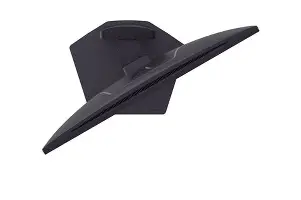
The "V-wing" stand design of the 27G850A B is aesthetically striking but has a surprisingly large footprint. Many buyers with shallow desks find that the legs of the stand extend quite far forward, eating into their mousepad space or forcing the monitor too close to their face. The stand offers height, tilt, and pivot adjustments, which is excellent, but those who plan on using a multi-monitor setup or who have a desk depth under 24 inches should strongly consider a VESA mount. Ignoring the physical dimensions of the stand often leads to a cramped gaming environment that detracts from the ergonomic benefits of the display.
Find top-rated Electronics products at great prices.
See Deals →Pros & Cons of the 27G850A B
To provide a clear picture of what to expect, we have categorized the strengths and weaknesses of this model based on long-term user feedback and technical testing.
- Pro: Exceptional Motion Clarity - Thanks to the Nano IPS technology, ghosting and motion blur are virtually non-existent, even in fast-paced first-person shooters.
- Pro: Superb Color Accuracy - Out of the box, the color calibration is often strong enough for light photo and video editing, covering a wide swath of the professional color space.
- Pro: Versatile Variable Refresh Rate (VRR) - The seamless integration with both G-Sync and FreeSync ensures a smooth experience across different hardware ecosystems.
- Pro: Intuitive OSD Controls - The joystick nub located at the bottom of the frame makes navigating the menu systems and switching inputs far easier than traditional buttons.
- Con: Low Contrast Ratio - Like most IPS panels, the contrast ratio sits around 700:1 to 1000:1, which means blacks can look more like dark greys in a pitch-black room.
- Con: "IPS Glow" - Some units may exhibit significant light bleed or "glow" in the corners when viewing dark content in low-light environments.
- Con: External Power Brick - The use of a large external power adapter can make cable management slightly more cumbersome compared to monitors with internal power supplies.
Comparison with Industry Alternatives
To understand where the 27G850A B sits in the market, it is helpful to look at how it compares to other common panel types and competitors in the same price bracket.
| Feature | 27G850A B (Nano IPS) | Standard VA Panel | Budget TN Panel |
|---|---|---|---|
| Color Accuracy | High (98% DCI-P3) | Moderate | Low |
| Response Time | 1ms (GtG) | 4ms - 10ms (dark smearing typical) | 0.5ms - 1ms |
| Contrast Ratio | ~1000:1 | ~3000:1 | ~800:1 |
| Viewing Angles | Wide (178 degrees) | Narrower (Shift occurs) | Poor (Vertical shift) |
| Price Point | Mid-to-High | Low-to-Mid | Low |
Comprehensive Buying Guide: Who is this for?
To avoid the mistake of buying the wrong tool for the job, you must evaluate your primary use cases. The 27G850A B is a specialized instrument, and while it is versatile, it excels in specific environments.
For the Competitive Gamer
If you spend your time in titles like Valorant, Counter-Strike, or Apex Legends, this monitor is an easy recommendation. The speed of the panel ensures that you aren't fighting your hardware. However, a common mistake here is not checking your PC's ability to maintain a steady 144 FPS at 1440p. If your system can only push 60-80 FPS at this resolution, you might be better off sticking with a 1080p high-refresh monitor or upgrading your GPU before purchasing this display.
For the Content Creator
Creatives who game on the side often choose the 27G850A B for its color reproduction. Because it covers such a large portion of the DCI-P3 gamut, it is excellent for video editors working on digital cinema standards. However, a mistake many creators make is forgetting to calibrate. While the factory settings are good, professional work requires an external colorimeter to ensure that the "Nano" color boost isn't oversaturating your project in a way that won't translate to other screens.
For the Media Consumer
If your primary goal is watching movies in a dark room, this might actually be a mistake. The IPS glow and lower contrast ratio can be distracting during dark, cinematic scenes. In this specific scenario, a VA panel or an OLED (at a significantly higher price point) would provide the deep blacks that make movies feel immersive. The 27G850A B is at its best in a well-lit room where the matte coating can handle reflections and the punchy colors can shine.
Technical Checklists Before You Buy
To verify that this monitor is the right fit, run through this technical checklist. First, check your GPU. You need an NVIDIA GTX 10-series or newer, or a modern AMD Radeon card, to use the VRR features effectively. Second, measure your desk. Ensure you have at least 11 inches of depth for the stand alone if you aren't mounting it. Third, assess your ambient lighting. If you have a window directly behind you, the 350-nit brightness might struggle against direct afternoon sun. Fourth, consider your future-proofing goals. 1440p is expected to remain the standard for mid-range gaming for the next several years, making this a safer long-term investment than 1080p.
Looking for the best Electronics deals on Amazon?
View Offers →Mistake 4: Not Checking for "Panel Lottery" Issues
In the electronics world, the "panel lottery" refers to the variance in quality between individual units of the same model. With the 27G850A B, the most common variance is in backlight uniformity. Some units may have perfectly even lighting, while others might have a slight yellow or blue tint in one corner. A major mistake is not testing the monitor immediately upon arrival. Buyers should use a "dead pixel test" website and a "backlight bleed" test (viewing a black image in a dark room) within the return window. Accepting a subpar unit because you didn't want the hassle of a return is a long-term mistake that will plague every dark game or movie you watch for years to come.
Mistake 5: Neglecting Software and Firmware Updates
Modern monitors are essentially specialized computers. One oversight buyers make is ignoring the OnScreen Control software. This software allows you to control monitor settings directly through Windows rather than fumbling with the physical joystick. More importantly, it can facilitate firmware updates. There have been instances where firmware updates improved the G-Sync compatibility stability or tuned the "Overdrive" settings to reduce overshoot (inverse ghosting). If you buy the monitor and never check for updates, you might be using a less-optimized version of the hardware than what is currently available.
The Importance of "Overdrive" Settings
Within the 27G850A B's menu, you will find "Response Time" or "Overdrive" settings, typically labeled as Normal, Fast, and Faster. A common mistake is immediately settting this to "Faster" because the box promised 1ms. On many units, the "Faster" setting introduces "overshoot" or coronas—a visual artifact where trailing edges of moving objects appear to glow or change color. For 90% of users, the "Fast" setting provides the best balance of speed and image quality. Experimenting with these settings is crucial; blindly choosing the highest setting is a mistake that actually degrades your visual experience.
Conclusion
The 27G850A B remains one of the most compelling options in the 1440p gaming category, provided the buyer enters the transaction with realistic expectations. The primary mistakes—ignoring port requirements, overestimating HDR, and failing to account for the physical footprint—are all easily avoidable with a bit of prior planning. This monitor is not a "jack of all trades" for every single person. It is a precision tool designed for speed and color vibrancy. If you prioritize deep blacks and viewing in total darkness, its IPS limitations might frustrate you. However, for the gamer who wants vibrant worlds, crystal-clear motion, and a resolution that makes every detail pop, it is an investment that pays dividends in every session.
By verifying your hardware compatibility, testing your panel for defects early, and setting up your ergonomics correctly, you can ensure that the 27G850A B fulfills its promise of a high-performance, immersive experience. Avoiding these common buying mistakes isn't just about saving money; it's about ensuring that your interface with the digital world is as seamless and beautiful as possible.