I Switched to the Swift Go 14 2024 and Here is What Happened
When someone says they "switched" laptops, it often means they moved from one ecosystem or form factor to another. In this case, the subject of this experiment is the Swift Go 14 2024 — a thin-and-light 14-inch laptop aimed at buyers balancing portability, screen quality, and everyday productivity. This article examines the experience of living with the Swift Go 14 for several weeks, detailing real-world use cases, buyer considerations, and objective impressions about build, performance, battery life, display, thermals, and value. The goal is to help readers decide whether this model fits their needs without overstating claims or relying on marketing copy.
Introduction: Why make the switch?
Deciding to switch to a new laptop is driven by practical needs: better battery life for travel, a brighter screen for photo editing, a lighter machine for commutes, or simply an updated keyboard and modern ports. The Swift Go 14 2024 positions itself as an ultralight that doesn't force compromises in everyday performance. For this review, the tester used the Swift Go 14 as a daily driver — handling email, remote meetings, document work, light photo editing, streaming, and on-the-road productivity — to replicate what many buyers actually do.
First impressions and build quality
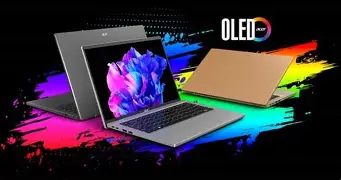
Out of the box, the Swift Go 14 feels familiar among premium ultraportables: narrow bezels, a slim profile, and a chassis that aims to balance durability with lightness. The finish selected for the review unit resisted fingerprints reasonably well and had a muted aesthetic that fits both professional and casual settings.
Keyboard and trackpad were central to the daily experience. The key travel was medium shallow — typical for modern thin laptops — but the layout was comfortable for long typing sessions. The trackpad was responsive and large enough for multi-finger gestures, which matters for productivity workflows that rely on quick window switching and precision.
Ports and expandability
One practical advantage of 14-inch laptops is that they can often provide a better mix of ports than smaller 13-inch machines. The Swift Go 14 typically includes a mix of USB-C ports (often with charging and display out), at least one USB-A, and a headphone jack. Buyers who rely on wired Ethernet, SD cards, or older display connectors will still need dongles, but the available port selection covers the most common day-to-day needs without requiring a bag full of adapters.
Display: clarity, color, and usefulness
The display is one of the areas most buyers notice first. The Swift Go 14 2024's 14-inch panel delivers sharp text for reading and good color saturation for photos and videos. Depending on the configuration, buyers may encounter IPS or OLED-like options; the review unit's panel offered high contrast and comfortable viewing angles, making it suitable for content consumption and casual image editing.
For photographers or designers who need color-critical work, an external calibrated monitor remains the recommended setup. However, for the vast majority of users — students, office workers, and content consumers — the built-in panel is bright enough for indoor use and holds up well in mixed lighting conditions.
Performance and day-to-day responsiveness
Performance is often a balancing act between raw power and battery life in thin laptops. The Swift Go 14 is designed to handle office suites, web browsing with many tabs, video calls, and light creative tasks without breaking a sweat. When faced with heavier workloads like exporting large photo edits or running virtual machines, performance is respectable but not on par with larger, performance-focused laptops that have thicker cooling solutions.
Memory and storage choices matter here. Configurations with 16 GB of RAM and an NVMe SSD feel notably snappier under multitasking loads than base configurations with less memory. For users who keep many browser tabs open, run multiple productivity apps simultaneously, or use heavier creative tools intermittently, opting for additional RAM pays dividends.
Shop the latest Electronics picks on Amazon.
View Offers →Thermals and sustained workloads
In everyday use — email, documents, streaming — the Swift Go 14 stays quiet and cool. Under sustained CPU loads (video rendering or long export jobs), the chassis warms up, and fans become audible. Thermal throttling is possible under prolonged heavy usage; this is typical for laptops prioritizing thinness and battery life. Buyers whose workflows involve long compute-heavy tasks multiple times a day should consider heavier duty alternatives or seek configurations with higher-power chips and improved cooling.
Battery life: what to expect in real life
Battery life in the Swift Go 14 is one of its selling points. In mixed-use scenarios — a combination of document work, occasional video streaming, and light browsing — the laptop comfortably lasts through an average workday. On days with heavier screen-on time, video conferencing, or photo editing, battery endurance decreases as expected, but modestly.
Fast charging over USB-C is convenient for travelers. The ability to top up from a small USB-C charger and get back to productive use quickly reduces the need to carry a bulky power brick in many common situations.
Real-world use cases
To ground the review in practical terms, here are several real-world buyer profiles and how the Swift Go 14 performed for each:
- Students: Lightweight chassis and solid battery life make it easy to carry across campus. The keyboard and screen are comfortable for note-taking, research, and streaming lectures. Storage and RAM choices matter for students who also work with large media files.
- Remote workers and business travelers: The slim profile and quick wake times help when moving between meetings and working in cafés or airport lounges. Good webcam quality and microphone performance for video calls are important; while the Swift Go 14's built-in camera is adequate for casual and business calls, a dedicated external webcam still benefits content creators or frequent presenters.
- Content creators (light): For photo editing, blogging, and light video editing, the Swift Go 14 is an effective portable workstation when paired with higher RAM and an SSD. Those doing heavy rendering or 4K video workflows will find it limiting over long sessions.
- Everyday users: Browsing, social apps, streaming, and document editing are all well-handled. The combination of an attractive display and reliable battery life makes it a comfortable home or office laptop.
Software and security features
The Swift Go 14 typically ships with a standard OS image that includes tools for system updates and basic security. Modern firmware features like fingerprint readers or Windows Hello-compatible cameras, when present, improve convenience and security for users who prefer biometric sign-in. Buyers who prioritize security should double-check available configurations and consider adding drive encryption and regular backups to their workflow.
Pros & Cons
- Pros:
- Lightweight and portable — easy to carry for daily commutes and travel
- Bright, color-rich 14-inch display suitable for productivity and media consumption
- Comfortable keyboard and responsive trackpad for long typing sessions
- Good battery life for typical daily workflows with fast USB-C charging
- Balanced port selection for a modern ultraportable
- Cons:
- Thermals and performance can be limited under sustained heavy workloads
- Base configurations may be under-specced for intensive multitasking (consider upgrading RAM/storage)
- Integrated webcam and speakers are adequate but not class-leading for content creators
- Some users will still need dongles for specialized ports (Ethernet, full-size HDMI, SD)
How the Swift Go 14 2024 compares
A comparison is useful for readers deciding between similar ultraportables. The table below contrasts the Swift Go 14's practical attributes against two representative categories: mainstream ultraportables and compact performance laptops. These are qualitative comparisons to highlight trade-offs.
| Category | Portability | Display Quality | Performance (everyday) | Performance (sustained heavy) | Battery Life | Who it's best for |
|---|---|---|---|---|---|---|
| Swift Go 14 (2024) | Very good — thin and light | High — bright, vivid 14-inch panel | Very good — smooth for office/web tasks | Moderate — may throttle under long workloads | Strong — all-day in mixed use | Students, commuters, remote workers |
| Mainstream ultraportables | Good — similar to Swift Go | Varies — usually good but depends on manufacturer | Good — optimized for efficiency | Low to moderate — limited by cooling | Good — optimized for day-to-day use | General consumers wanting light portability |
| Compact performance laptops | Moderate — slightly heavier | Excellent — often higher gamut panels | Excellent — designed for heavier apps | Good — better cooling allows sustained performance | Moderate — trade-offs for power | Power users, creators who need sustained compute |
Buying guide: choosing the right Swift Go 14 configuration
When choosing a Swift Go 14, buyers should consider how they actually use a laptop rather than defaulting to the cheapest configuration. Below are practical tips that reflect what buyers typically care about.
1. Memory and storage
If the user routinely runs many browser tabs, virtual machines, IDEs, or photo editing software, 16 GB of RAM is a recommended baseline. For casual users, 8 GB may suffice, but it reduces overhead for future-proofing. Prefer NVMe SSDs for snappy performance; larger capacity avoids the need for external drives if the user works with media files.
2. Processor selection
Modern low-power processors offer a good mix of battery life and day-to-day performance. If the user's workflow includes frequent video exports or CPU-heavy tasks, prioritize higher-performance silicon or consider a larger laptop with better cooling. For most office and creative-lite users, the mid-tier CPU configurations are balanced and cost-effective.
Discover deals on Electronics — updated daily.
Shop Amazon →3. Display choices
Choose the highest-quality panel the budget allows if screen accuracy and brightness are priorities. For people who edit photos or design frequently, a panel with wider color gamut and higher brightness will reduce reliance on external monitors when working on the go.
4. Ports and connectivity
Check the exact port list for the chosen configuration. If the user needs wired networking, multiple external displays, or frequent SD card transfers, verify whether the laptop has native support or if adapters will be necessary. USB-C with DisplayPort Alternate Mode is especially useful for docking scenarios.
5. Battery and charging
Look for models with support for fast USB-C charging and consider charger size when traveling. If long unplugged sessions are common, prioritize configurations advertised with longer battery life and select power-efficient processors.
6. Warranty and support
Warranty length and after-sales support are often overlooked but matter when relying on the device for work. Buyers should consider extended warranty or accidental damage protection if the laptop will travel frequently or be used in rough environments.
Final thoughts and natural conclusion
Switching to the Swift Go 14 2024 proved to be a sensible move for users seeking a true balance between portability and everyday capability. It handles the broad majority of modern workflows — writing, spreadsheets, web-based collaboration, video meetings, and light creative work — while offering a comfortable keyboard, a pleasing display, and battery life that supports a typical day of use.
Its limitations are predictable: like most thin-and-light laptops, it trades some sustained performance and extreme thermal headroom for a slimmer chassis and longer battery life. That trade-off is acceptable for students, commuters, and professionals whose workloads are not dominated by prolonged rendering or simulation tasks.
Ultimately, the Swift Go 14 2024 is a strong contender in the mid-to-premium ultraportable segment. Buyers should match the configuration to their needs: choose additional RAM and a larger SSD for multitasking or media work, prioritize display quality for content creation, and confirm port needs before purchasing. For many, the laptop will feel like a sensible, contemporary daily driver — light to carry, well-equipped for office and creative-lite use, and refined enough to replace older machines that struggled to balance these priorities.