Should You Buy the Nymvpn in 2026? A Deep Dive
When I first started using Nymvpn, I wasn’t looking for just another VPN with a slick app and a long list of server locations. I wanted something meaningfully different: stronger privacy, less trust in a single company, and a setup that didn’t feel like the usual “connect and hope for the best” model. After using it for several months across a laptop-heavy routine that included work sessions, hotel Wi-Fi, café browsing, video calls, and a lot of general travel use, I came away with a clear opinion: Nymvpn is fascinating, impressively privacy-focused, and not for everyone.
That’s really the heart of this review. If you care deeply about anonymity, metadata protection, and minimizing how much any single provider knows about you, I think Nymvpn is one of the more interesting products available in 2026. But if you want the simplest possible VPN for fast streaming, frictionless gaming, or one-click convenience, I found it easier to admire than to recommend universally.
In this article, I’ll break down what I liked, what disappointed me, how it fit into my day-to-day laptop use, and whether I think it’s worth buying in 2026.
My First Impression of Nymvpn
The first thing I noticed about Nymvpn was that it doesn’t market itself like a standard consumer VPN. Most VPNs promise speed, access, and convenience. Nymvpn talks much more about decentralization, mixnet routing, traffic analysis resistance, and anonymity. That may sound abstract, but after testing it for months, I can say the difference is real in practice.
I used Nymvpn primarily on a laptop, which is why I think it belongs in the Laptops category even though it’s technically a software service. For many laptop users, a VPN becomes part of the daily workflow: connecting on public Wi-Fi, protecting work sessions while traveling, and keeping browsing habits less exposed. On that level, Nymvpn felt less like a casual utility and more like a privacy tool designed for people who actually care how VPN infrastructure works.
What I found was that Nymvpn’s biggest strength is also its biggest limitation. It is built around privacy first, not convenience first. I appreciated that honesty. I also felt the trade-offs immediately.
What Nymvpn Actually Does Differently
In my experience, Nymvpn stands out because it isn’t just routing your traffic through one provider-managed tunnel and asking you to trust that provider completely. Its pitch centers on a more decentralized privacy architecture, with modes designed to obscure traffic patterns more aggressively than a typical VPN does.
After using it, I’d describe the experience like this: standard VPNs usually try to be invisible and fast. Nymvpn tries to be private in a more fundamental way, even when that makes things less seamless.
I noticed two very different use cases depending on the mode I chose:
- Fast mode felt closer to what most people expect from a VPN. It was more practical for daily browsing, cloud apps, and regular laptop use.
- Anonymous mode was where the service became more unique, but also more demanding. It added more latency and was clearly not intended for people who only care about speed.
That distinction matters. If you buy Nymvpn expecting it to behave exactly like a mainstream VPN, I think you’ll be frustrated. If you buy it because you specifically want stronger privacy protections and are willing to accept performance compromises, it makes much more sense.
My Day-to-Day Experience on a Laptop
I’ve been using this for several months on a mix of home broadband, hotel networks, airport Wi-Fi, and mobile tethering. Most of my use was on a laptop for browser work, writing, research, email, document syncing, and occasional voice or video meetings.
For plain browsing and productivity tasks, Fast mode was the sweet spot. Pages loaded reasonably quickly, cloud dashboards stayed usable, and general web use felt stable enough that I didn’t constantly think about the VPN. That was a good sign. A privacy product becomes much easier to live with if it doesn’t punish ordinary use.
Anonymous mode was different. I was surprised by how clearly the trade-off presented itself. It didn’t feel broken, but it definitely felt heavier. Some sites took longer to become responsive, and I noticed the delay most when opening image-heavy pages, loading web apps with lots of scripts, or trying to jump between tabs quickly. On a laptop, where multitasking speed matters, that extra friction became noticeable fast.
Find top-rated Laptops & Computers products at great prices.
Browse Now →One thing that bothered me was that I had to be more intentional about when I used each mode. I couldn’t just leave it on one setting and forget about it forever. For users who like simple tools, that may feel annoying. For users who care about choosing the right privacy level for the moment, it may actually feel empowering.
Performance: Better Than I Expected, But Still a Compromise
Going in, I expected Nymvpn to be slow. In regular use, it was not as bad as I feared, especially in Fast mode. I could browse, upload documents, use messaging platforms, and do ordinary laptop work without serious problems. For that, I give it credit.
Still, I wouldn’t buy this service mainly for raw speed. In my experience, that would be the wrong reason to choose it.
What I appreciated was that the performance felt purposeful. I never got the impression that the service was merely under-optimized in the lazy sense. Instead, it felt like performance was being balanced against a more ambitious privacy design. That doesn’t erase the downsides, but it changes how I judge them.
I noticed that long video streams, large downloads, and latency-sensitive tasks were where Nymvpn felt least comfortable. If your laptop routine involves a lot of gaming, ultra-high-bitrate streaming, or constant large file transfers, I think there are easier choices. If your routine is more about secure browsing, writing, email, research, and keeping your traffic harder to analyze, the compromises feel more acceptable.
Privacy and Trust: This Is Why I’d Consider Buying It
The main reason I’d seriously consider paying for Nymvpn in 2026 is the privacy philosophy behind it. I liked that it tries to reduce reliance on a single point of trust. I also liked that it leans into anonymity instead of treating privacy as a marketing slogan.
After testing for months, that was the biggest emotional difference between Nymvpn and many conventional VPNs I’ve used: with a normal VPN, I’m often just shifting trust from my ISP to a VPN company. With Nymvpn, I felt like the architecture itself was trying harder to protect me from overexposure.
That won’t matter to every buyer. Many people only want a VPN to secure café Wi-Fi or hide their IP during ordinary browsing. For those users, Nymvpn may be overkill. But if you’re the kind of laptop user who thinks about metadata, surveillance, censorship resistance, and long-term privacy risks, I found the product much more compelling.
Ease of Use and Learning Curve
This is not the most beginner-friendly VPN I’ve used. It isn’t impossible to set up, and the apps are more polished in 2026 than I expected, but I still wouldn’t call the overall experience effortless.
I noticed that understanding the product helps a lot. If you know why mixnets, multi-hop routing, and anti-correlation design matter, the interface choices and performance trade-offs are easier to accept. If you don’t care about any of that, Nymvpn can feel like a more complicated path to a result other VPNs already provide more simply.
One thing I appreciated was that the product didn’t seem to be pretending it was for everyone. In a market full of generic promises, I found that refreshing. Still, I think the service would benefit from even clearer in-app explanations for people who are curious but not highly technical.
Where It Fits Best for Laptop Users
Because this article is in the Laptops category, I think it’s important to say who this service best suits on a laptop specifically. In my experience, Nymvpn makes the most sense for:
Discover deals on Laptops & Computers — updated daily.
Browse Now →- people who regularly work on public or semi-trusted networks,
- travelers who value privacy over maximum speed,
- journalists, researchers, activists, or highly privacy-conscious users,
- remote workers who want stronger protection while handling sensitive accounts or documents.
I think it makes less sense for laptop owners who mostly want a VPN for entertainment, location switching, or the absolute fastest experience possible. It can do everyday tasks, but that isn’t where it feels most special.
Pros and Cons
What I Liked
- Genuinely privacy-focused design: I felt Nymvpn was built around anonymity first, not just marketing language.
- More trust-minimizing than many VPNs: What I found was that its architecture made me less dependent on blindly trusting one provider.
- Strong fit for laptop travel use: I appreciated having it on unfamiliar Wi-Fi networks where I wanted more than basic tunnel protection.
- Fast mode was more usable than I expected: For writing, browsing, email, and normal productivity, it held up reasonably well.
- Distinct product identity: I was surprised by how different it felt from the interchangeable mainstream VPN crowd.
- Cross-platform support: It worked across the devices I’d realistically pair with a laptop-centered workflow.
What Disappointed Me
- Anonymous mode can feel slow: I noticed the extra latency quickly, especially when multitasking on a laptop.
- Not the easiest recommendation for casual buyers: If someone just wants “a VPN that works,” this may feel more complex than necessary.
- Not ideal for every entertainment use case: In my experience, it’s not the first service I’d choose for speed-sensitive streaming or gaming.
- Requires intentional mode switching: One thing that bothered me was having to think about which mode I wanted instead of forgetting the app existed.
- Value depends heavily on your priorities: If privacy is not your top concern, the trade-offs may not feel worth it.
Nymvpn vs. a Typical Mainstream VPN
I think a comparison table is useful here because Nymvpn shouldn’t really be judged by the exact same standards as a generic VPN subscription.
| Category | Nymvpn | Typical Mainstream VPN |
|---|---|---|
| Primary focus | Privacy, anonymity, metadata resistance | Speed, convenience, streaming, broad appeal |
| Architecture | More decentralized and privacy-centric | Usually centralized provider-controlled infrastructure |
| Daily usability | Good in Fast mode, more demanding in Anonymous mode | Usually simpler and more consistent |
| Performance | Acceptable to good depending on mode, but variable | Often faster for general consumer use |
| Learning curve | Moderate | Usually low |
| Best for | Privacy-focused laptop users and higher-risk scenarios | Casual users, streamers, gamers, general convenience |
| Recommendation style | Specific audience fit | Broader mainstream fit |
Buying Guide: Who Should Buy Nymvpn in 2026?
If you’re trying to decide whether to buy Nymvpn this year, I’d frame the choice around your actual laptop habits rather than around hype.
You should consider buying it if:
- You care deeply about privacy: If you’re the kind of person who reads privacy policies, worries about traffic analysis, or dislikes handing one company full visibility into your activity, I think Nymvpn is worth a serious look.
- You travel often with a laptop: I found it reassuring on public networks where I wanted extra protection and a more thoughtful privacy model.
- You’re comfortable with trade-offs: After testing for several months, I’d say the right buyer is someone willing to give up some speed and simplicity in exchange for stronger anonymity.
- You want something different from the mainstream VPN formula: I appreciated that it didn’t feel like a clone service with recycled promises.
You may want to skip it if:
- You mainly want the fastest possible VPN: In my experience, performance is acceptable, but speed isn’t the reason to buy this.
- You hate tweaking settings or learning new concepts: If you want one-button simplicity, there are easier options.
- Your main goal is entertainment access: I think other VPNs are more naturally suited to users who care mostly about streaming convenience and low-latency media use.
- You don’t personally value advanced privacy architecture: If the deeper design doesn’t matter to you, the compromises may just feel like annoyances.
Questions I’d Ask Before Buying
Before paying for Nymvpn, I’d ask myself the following:
- Do I want a privacy tool, or do I just want a generic VPN?
- Will I actually use the stronger anonymity mode when it matters?
- Am I okay with lower speed in exchange for better privacy properties?
- Is my laptop workflow more about secure browsing and work, or more about streaming and gaming?
Those questions matter because Nymvpn feels best when purchased with the right expectations.
My Final Verdict After Several Months
After using Nymvpn for several months, I think it’s one of the most interesting VPN products to consider in 2026, but I also think it’s a niche recommendation rather than a universal one.
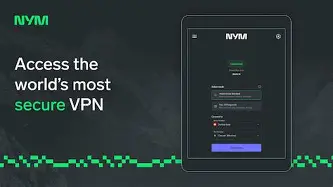
What I appreciated most was that it seemed to take privacy seriously at the architectural level. That gave me more confidence than the usual no-logs marketing language I see everywhere else. I also liked that Fast mode made the service practical enough for real laptop use instead of turning every session into a privacy tax.
What disappointed me was the friction. Anonymous mode still feels like a deliberate compromise, not a free upgrade, and I noticed the slowdown often enough that I had to choose my moments carefully. One thing that bothered me throughout testing was that Nymvpn asks more from the user than mainstream alternatives do. It expects you to know what you value.
So, should you buy the Nymvpn in 2026? If privacy is your top priority and you’re willing to accept some speed and convenience trade-offs, yes, I think it’s a compelling buy. If what you really want is a fast, simple, mainstream VPN for casual use, I’d be honest and say you’ll probably be happier elsewhere.
For me, Nymvpn felt less like a mass-market utility and more like a specialized privacy tool that happened to be usable enough for everyday laptop life. That won’t make it the best VPN for everyone, but it does make it one of the more worthwhile ones to understand before you spend your money.