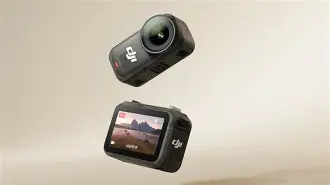
The Ultimate Showdown: Canon EOS C50 vs DJI Osmo Nano for 2026
The dawn of 2026 has brought with it a dramatic shift in the landscape of digital imaging. For years, the industry was bifurcated: professional cinematographers reached for bulky, high-end rigs, while casual creators opted for ultra-portable, gimbal-stabilized devices. However, as sensor technology has miniaturized and artificial intelligence has revolutionized image processing, these two worlds have finally collided. Today, we stand at a fascinating crossroads where a "compact" cinema camera and an "intelligent" micro-gimbal offer overlapping capabilities that make a purchasing decision harder than ever before.
In this editorial analysis, we examine two of the most significant releases of the year within the Cameras category: the Canon EOS C50 and the DJI Osmo Nano. On one side, we have Canon’s most aggressive attempt to date at bridge-building—a professional-grade RF-mount cinema camera shrunk down to the size of a mirrorless body. On the other, we have DJI’s Osmo Nano, a device that redefines what a "camera" even looks like, utilizing a modular, drone-derived sensor on a thumb-sized three-axis stabilizer. While they occupy different price brackets and physical footprints, both aim to solve the same problem: how to capture world-class, high-bitrate footage without the logistical nightmare of a 20-pound camera bag. This is the ultimate showdown for the 2026 visual storyteller.
The Contenders: A New Era of Hybrid Power
Before diving into the technical nuances, it is essential to understand the design philosophies behind these two products. Canon is operating from a position of "top-down" innovation. They have taken the legendary color science and autofocus reliability of their Cinema EOS line and stripped away the bulk to create the C50. It is a tool for the filmmaker who values optics, ergonomics, and longevity. It is built for the "A-camera" life on an indie set or a high-end YouTube production.
DJI, conversely, is operating from a "bottom-up" methodology. Having dominated the skies with their drone technology and the ground with the Pocket series, the Osmo Nano represents the pinnacle of their stabilization expertise. It is designed for the era of vertical content, rapid movement, and AI-assisted tracking. It isn't just a camera; it is a smart sensor that moves with the user, attempting to eliminate the need for a dedicated camera operator in many scenarios. For the solo documentarian or the traveler, the Osmo Nano represents the fastest path from an idea to a finished 8K file.
Canon EOS C50: The Cinema Workhorse Redefined
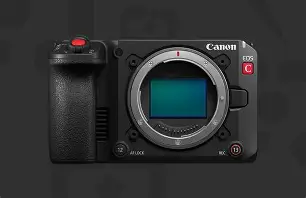
The Canon EOS C50 is a testament to how far thermal management has come. Despite its diminutive size, it houses a Super 35mm 6K sensor that produces the "organic" look Canon is famous for. The 2026 iteration of their Dual Pixel CMOS AF (now version IV) is breathtakingly fast, utilizing deep-learning algorithms to track subjects even when they are obscured by foreground elements or wearing masks. This is a critical feature for run-and-gun filmmakers who cannot always afford a dedicated focus puller.
One of the standout features of the C50 is its internal recording capabilities. In 2026, we expect nothing less than 12-bit RAW, and Canon delivers. The camera records Cinema RAW Light internally to dual CFexpress Type B slots, allowing for massive dynamic range and flexibility in the color grade. Furthermore, the inclusion of a built-in ND filter system—something previously thought impossible in a body this small—is a game-changer for outdoor shooting. Being able to toggle through 2, 4, and 6 stops of ND without swapping physical filters on the lens saves precious minutes during the "golden hour" when lighting conditions change by the second.
Ergonomically, the C50 feels like a professional tool. It features a dedicated tally light, professional XLR audio inputs via a top handle, and a robust mounting system for external monitors. However, it still requires a lens. While the RF mount is versatile, adding a high-quality zoom lens significantly increases the weight and footprint. This is where the "portability" argument for the C50 begins to diverge from the Osmo Nano.
Pros of the Canon EOS C50
- Superior Super 35mm sensor offering professional-grade dynamic range and 12-bit Cinema RAW Light.
- World-class Dual Pixel CMOS AF IV with advanced human, animal, and vehicle detection.
- Integrated mechanical ND filter system for seamless exposure control in variable lighting.
- Standard RF mount provides access to some of the finest glass in the world, including anamorphic options.
- Professional I/O including full-size HDMI, XLR audio, and Timecode for multi-camera synchronization.
Cons of the Canon EOS C50
- Requires a significant investment in lenses to reach its full potential.
- Total system weight is much higher than the DJI equivalent once rigged for production.
- Battery life can be restrictive when recording in high-bitrate RAW formats.
- Price point is aimed squarely at professionals, making it a heavy investment for casual creators.
DJI Osmo Nano: The Intelligence of Motion
The DJI Osmo Nano represents a radical departure from traditional camera design. It looks more like a high-tech medical instrument than a camera. The core of the device is its 1-inch CMOS sensor, which, while smaller than the Canon’s S35, is remarkably capable due to DJI's "Neuro-ISP" processing. By the standards of 2026, the AI noise reduction on the Nano makes its 1-inch sensor perform more like a Full Frame sensor from three years ago in low-light conditions.
Stabilization is the Nano's true superpower. While the Canon C50 relies on In-Body Image Stabilization (IBIS) and lens-based IS, the Osmo Nano uses a physical 3-axis brushless gimbal. This allows for movements that would be impossible on the Canon without a bulky external gimbal rig. You can sprint, climb, or even attach the Nano to a moving vehicle, and the footage remains "buttery" smooth. The Nano also features "ActiveTrack 7.0," which can follow a subject through a crowded market or a dense forest with eerie precision, rotating the camera head independently of the handle.
Looking for the best Cameras & Photography deals on Amazon?
Shop Amazon →The Nano is also built for the "TikTok/Reels" generation through its native vertical shooting mode. With a single tap, the gimbal head rotates 90 degrees, allowing for full-resolution vertical 4K or 8K capture. No cropping is required. For the creator who needs to post to social media within minutes of filming, the Nano’s built-in 6G wireless transfer speeds and automated "Highlight Reel" generator (hosted on-device via a dedicated NPU) are invaluable.
Pros of the DJI Osmo Nano
- Unbeatable physical 3-axis stabilization in a pocketable form factor.
- AI-driven "Neuro-ISP" provides exceptional low-light performance for its sensor size.
- Native vertical shooting mode makes it the ultimate tool for social media platforms.
- Extremely fast workflow with automated editing suggestions and high-speed wireless transfer.
- Modular design allows for various attachments, including an extended battery grip and an external mic receiver.
Cons of the DJI Osmo Nano
- Fixed-focal-length lens limits creative choices regarding compression and bokeh.
- The 1-inch sensor cannot match the depth of field or "texture" of the Canon’s S35 sensor.
- Smaller physical controls can be finicky for users with larger hands or when wearing gloves.
- Limited professional I/O; requires adapters for serious audio or monitoring setups.
Side-by-Side Comparison
To better understand where these two devices land in the 2026 ecosystem, we have compiled a comparison of their core specifications and target use cases. This table highlights that while they can both produce 8K images, the way they produce those images is fundamentally different.
| Feature | Canon EOS C50 | DJI Osmo Nano |
|---|---|---|
| Sensor Type | Super 35mm CMOS | 1-inch Stacked CMOS |
| Max Resolution | 6K RAW (oversampled) / 4K 120p | 8K 60p / 4K 120p |
| Lens System | Interchangeable (Canon RF Mount) | Fixed 20mm f/1.8 (Equivalent) |
| Stabilization | 5-Axis IBIS + Electronic | Mechanical 3-Axis Gimbal |
| Internal NDs | Yes (Mechanical, 2-6 stops) | No (Requires Magnetic Filters) |
| Audio Inputs | Dual XLR (via Handle), 3.5mm | 3.5mm, Wireless Mic integration |
| Weight (Body Only) | 680g | 145g |
| Target User | Cinematographers & Documentary Filmmakers | Vloggers & Solo Content Creators |
Deep Dive: Real-World Use Cases
To truly decide between these two, a buyer must look past the spec sheet and into their daily routine. Let’s examine three common scenarios where a filmmaker might find themselves in 2026.
Scenario 1: The Commercial Interview
If you are hired to film a corporate profile or a high-end commercial interview, the Canon EOS C50 is the clear winner. Why? Because lenses matter. To make a subject "pop" from the background, you need the shallow depth of field provided by an f/1.2 or f/1.8 prime lens on a Super 35mm sensor. The C50 allows you to use a 50mm or 85mm lens to compress the background and create a professional, cinematic look. Furthermore, the XLR inputs allow you to plug in high-quality boom mics directly, ensuring that the audio—the most important part of any interview—is pristine and synced.
Scenario 2: The High-Action Travel Doc
Imagine you are trekking through the foothills of the Himalayas or navigating the crowded streets of Tokyo at night. In this scenario, the DJI Osmo Nano takes the trophy. Its weight is almost negligible, meaning you can keep it in a jacket pocket. When a moment happens, you can pull it out, and it is stabilized and recording in under two seconds. The ActiveTrack technology allows you to set the camera on a rock or a tripod and walk in front of it; the camera will follow you like a personal cameraman. For the solo traveler, the Nano acts as a force multiplier.
Scenario 3: The Event Highlight Reel
For music festivals or weddings, the choice becomes more nuanced. Many creators are now using both. The Canon C50 serves as the primary camera for the ceremony or the main stage performance, capturing the high-fidelity RAW footage. Meanwhile, the DJI Osmo Nano is used for "transition shots"—running through the crowd, low-angle pans of the dance floor, or quick "vlog-style" updates. However, if you could only pick one for a fast-paced event, the Osmo Nano’s ability to switch to vertical mode instantly makes it more versatile for modern delivery requirements.
2026 Buying Guide: Which One is for You?
The "ultimate showdown" isn't necessarily about which camera is technically better, but which one fits your specific workflow. In 2026, the "best" camera is the one that gets used, rather than sitting on a shelf because it’s too complicated or too limited.
Choose the Canon EOS C50 if: You are a filmmaker who prioritizes the "image" above all else. If you plan on color grading your footage extensively, if you need to match footage with other cinema cameras like the C300 or C70, or if you rely on specific focal lengths to tell your story, the C50 is your tool. It is a long-term investment in a lens ecosystem that will last a decade. It is also the "safer" choice for professional client work where the appearance of a "real" camera adds to your perceived authority on set.
Looking for the best Cameras & Photography deals on Amazon?
View Offers →Choose the DJI Osmo Nano if: Mobility and speed are your primary constraints. If your content is destined for smartphones, the Nano’s 8K resolution and AI-enhanced 1-inch sensor provide more than enough quality. If you find gimbals and tripods frustrating to set up, the Nano’s "all-in-one" approach will liberate your creativity. This is the device for the "lifestyle" creator who wants to spend less time managing gear and more time living the experiences they are filming.
Consider the "Hybrid" Approach: It is worth noting that in 2026, many professionals are viewing these not as rivals, but as partners. The price of the Osmo Nano is low enough that it fits into the "accessory" budget for many C50 owners. Using the C50 for your master shots and the Nano for your "impossible" movement shots provides a level of production value that was simply unattainable for individual creators just five years ago.
The Impact of AI and Post-Processing
One cannot discuss 2026 cameras without mentioning the software. The Canon C50 uses its onboard processing to ensure that the RAW data is as clean as possible, allowing the editor to make the final decisions. The DJI Osmo Nano, however, takes a more proactive approach. Its AI "Direction" mode can actually suggest better framing in real-time. If you are filming a sunset, it might nudge the gimbal slightly to follow a "Rule of Thirds" composition that it detects. This "intelligent" assistance is polarizing—some pros hate the loss of control, while many new creators find it helps them learn the craft faster.
Furthermore, both cameras now integrate seamlessly with neural-network-based upscalers and noise reducers. In 2026, the gap between a 1-inch sensor (like the Nano) and a Super 35mm sensor (like the C50) can be partially bridged in post-production. However, physics still wins: the larger sensor of the C50 will always have a more natural roll-off in the highlights and a more pleasing "noise floor" that AI struggles to perfectly replicate without looking "plastic."
Conclusion
The battle between the Canon EOS C50 and the DJI Osmo Nano reflects the broader evolution of the camera industry. We are moving away from a world of "one size fits all" and into a world of specialized excellence. The Canon C50 is a triumph of miniaturization, bringing authentic cinema-quality imaging into a form factor that won't break your back. It is the sophisticated, deliberate choice for those who view filmmaking as a craft of precision.
The DJI Osmo Nano is a triumph of integration, combining stabilization, AI, and optics into a device that feels like an extension of the user’s hand. It is the bold, energetic choice for those who view filmmaking as an act of spontaneous storytelling. While the C50 captures reality with more fidelity, the Nano captures it with more freedom.
Ultimately, the "Ultimate Showdown" of 2026 ends in a draw, with the winner being the consumer. Whether you choose the robust reliability of the Canon or the agile intelligence of the DJI, you are gaining access to imaging power that was once reserved for Hollywood studios. The barrier between "amateur" and "professional" has finally moved from the gear to the vision of the person holding it. In the year 2026, the only thing holding back your production isn't the camera—it’s the story you choose to tell.